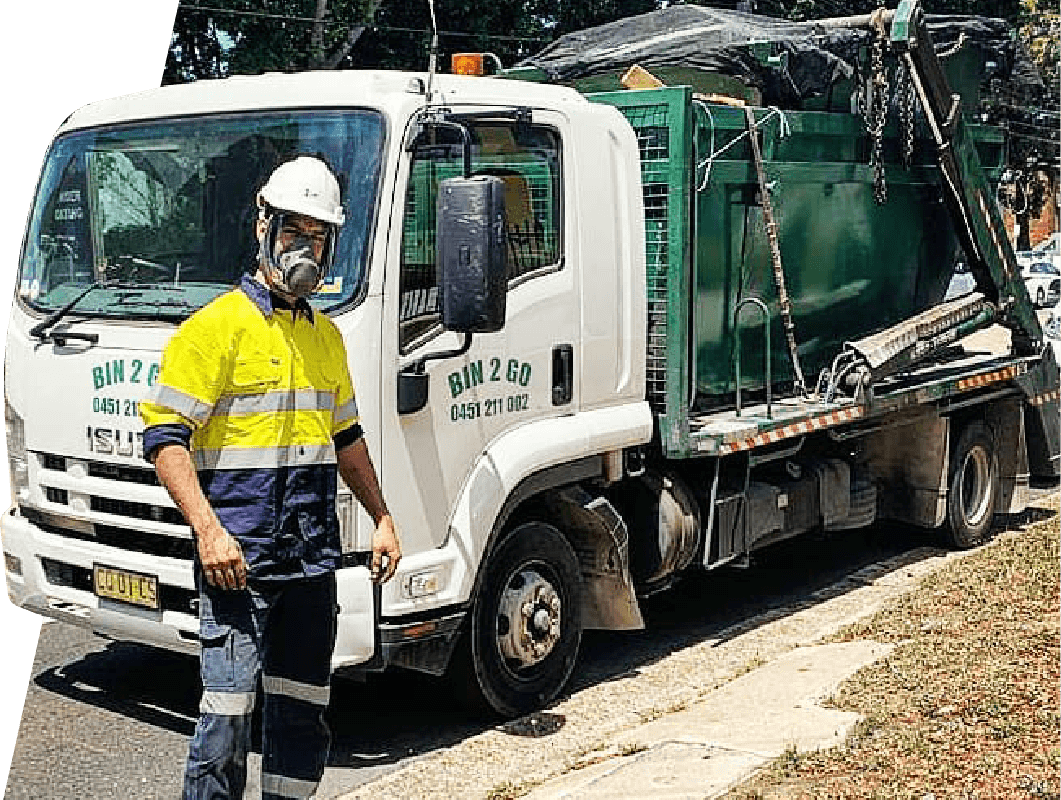
Reliable Removal Of Rubbish
On-Time Clearance Of Bins
24x7 Services For You
Bin2Go
0451 211 002

How Skip Bin Hire Supports Home Renovations in Sydney

View Bin sizes
Bin2Go
Skip Bin Sizes
VARIETY OF SKIP BIN SIZES
Competitive Rates
COMPETITIVE RATES & SERVICE
Same Day Delivery
SAME DAY on time DELIVERY
Environmental Recycling
ENVIRONMENTAL RECYCLING

Skip bin hire is one of the most practical and cost-effective tools available for any home renovation in Sydney, ideally an on-site container for construction waste, demolished materials, and renovation rubbish so your worksite stays safe, your tradespeople stay productive, and your renovation project runs on time without constant tip runs slowing everything down.

So, when you're renovating a bathroom, knocking out a kitchen, adding an extension, or doing a full house overhaul, the way you manage waste directly affects the efficiency, the safety, and ultimately the total cost of your project. This is how skip bin hire supports every stage of a Sydney home renovation and makes the whole project go smoother.

1. Pre-demolition planning and get the bin before you start

The most important skip bin decision you'll make is timing. The bin should be on your property before demolition begins, not ordered after the first wall comes down.

What to do before demolition:

  • Identify the waste types your renovation will generate (see the stage-by-stage breakdown below)
  • Identify any hazardous materials that need specialist handling before demolition begins
  • Choose the right bin size for your project scope
  • Confirm your driveway has adequate access for skip bin delivery
  • Book the bin to arrive one to two days before demolition starts

This small amount of advance planning eliminates one of the most common sources of renovation stress before it ever becomes an issue.

2. Demolition stage: The highest-volume waste stage

Demolition is messy, fast, and generates more waste than you anticipate. Understanding what comes out helps you plan appropriately.

Bathroom demolition waste typically includes:

  • Ceramic and porcelain tiles (floor and wall, heavy)
  • Cement sheet and waterproofing materials
  • Old bathroom fixtures like bath, toilet, vanity, shower screen
  • Plasterboard and internal wall materials
  • Old plumbing fittings, taps, waste pipes
  • Timber framing where walls are being altered

Kitchen demolition waste typically includes:

  • Cabinetry or upper and lower in pieces
  • Benchtop materials (stone, laminate, timber)
  • Tile splashback
  • Old appliances (separate disposal may apply for some)
  • Flooring beneath the kitchen
  • Plasterboard, cornice, and ceiling materials if altered

Structural and extension demolition waste:

  • Brickwork and blockwork (very heavy as weight limits critical)
  • Roof tiles and roofing materials
  • Structural timber
  • Concrete slabs and footings (requires specific bin type)
  • Old windows and frames
  • Insulation

Bin2Go bin sizes for demolition waste:

Renovation Scope Recommended Bin Size
Bathroom renovation 4–6 cubic metres
Kitchen renovation 6–7 cubic metres
Combined bathroom and kitchen 7–9 cubic metres
Room extension or addition 9–11 cubic metres
Full house renovation 11–14 cubic metres
Heavy demolition (brick, concrete) Discuss with Bin2Go — weight limits apply

Important for heavy materials: Brick, concrete, and tiles are dense materials with significant weight per volume. Many skip bins have weight limits that can be reached before the bin appears full. When demolition involves significant quantities of brick, concrete, or stone, discuss weight limits with Bin2Go when booking and consider whether a smaller bin booked twice is more appropriate than one large bin.

3. Structural and framing work with ongoing waste management

After demolition, the structural and framing stage generates a different type of waste, such as smaller volumes, but a consistent stream of offcuts and packaging.

Framing waste typically includes:

  • Timber stud offcuts
  • Nogging material offcuts
  • Metal stud offcuts (steel framing)
  • Waterproofing and sarking materials
  • Fixing hardware packaging

Tip: Ask your builder or framing contractor to break down large timber offcuts before throwing them in the skip. Long, unbroken lengths of timber waste bin space that could be used for more compact materials.

4. Services Rough-In — Plumbing, Electrical, and HVAC

The services rough-in stage, running new plumbing, electrical conduit, and air conditioning ducts, generates moderate volumes of specific waste types.

Services rough-in waste typically includes:

  • Old copper and PVC pipe lengths
  • Old electrical cable and conduit
  • Junction boxes, fittings, and connectors
  • Duct materials from old HVAC systems
  • Insulation around pipes and ducts

Recycling opportunity: Copper pipe and cable are genuinely valuable scrap metal. Collect copper offcuts separately from general bin waste. Most scrap metal dealers will buy copper, and the return may offset a portion of your waste management cost.

5. Plastering and rendering— dusty, heavy, and continuous

Plastering and rendering stages generate significant quantities of heavy, dusty waste that needs to be managed carefully.

Plastering waste includes:

  • Off-cuts and damaged plasterboard sheets
  • Cornice pieces and trims
  • Render bags and packaging
  • Tape, jointing compound containers
  • Drop sheets and masking materials

Skip bin management during plastering: Plasterboard is relatively lightweight by volume but can be awkward in a skip due to its sheet dimensions. Break sheets down into manageable pieces before loading rather than throwing full sheets in.

6. Tiling are the heavy-hitter of renovation waste

Tiling is one of the heaviest waste-generating stages of a renovation by weight. Floor and wall tiles, even after installation, generate significant quantities of cut-off cuts. Combined with adhesive tubs, grout bags, and waste packaging, tiling creates a consistent stream of heavy material.

Tiling waste includes:

  • Tile offcuts (all sizes, substantial weight)
  • Adhesive and grout packaging
  • Broken tiles from cuts gone wrong
  • Old tiles removed during preparation

Weight management during tiling: If your renovation has extensive tiling, a large bathroom floor, a full kitchen splashback, outdoor tiling keep tile offcuts and waste in mind when choosing bin size. Tile waste is deceptively heavy. A bin that looks half-full of tile offcuts may already be approaching its weight limit.

7. Kitchen and bathroom fitout

Installing cabinetry, fitting appliances, and mounting fixtures generates more packaging waste than material waste.

Fitout waste includes:

  • Cardboard and polystyrene appliance and cabinet packaging
  • Protective film and wrapping materials
  • Small hardware packaging
  • Unused and excess materials
  • Off-cuts from cabinet adjustments and installations

Tip: Cardboard is bulky but lightweight. Flatten all cardboard boxes before putting them in the skip.

8. Painting and finishing

The final stage of most renovations generates relatively light waste, but there's an important compliance consideration: paint cannot go in a skip bin.

Finishing stage waste that CAN go in the skip:

  • Roller sleeves and brushes
  • Masking tape and drop sheets
  • Sandpaper and abrasive materials
  • Plastic sheeting and protective coverings
  • General cleaning waste

Finishing stage waste that CANNOT go in the skip:

  • Paint tins (even empty ones should be fully dry before disposal)
  • Solvent and thinners containers
  • Painting chemicals

Liquid paint must be processed through Paintback, not disposed of in a skip bin or in household rubbish.

Starting a Renovation? Book Your Skip Bin Before Demolition Begins

Bin2Go is Sydney's most reliable skip bin hire for residential and commercial renovations. Same-day delivery. Best price guaranteed. 24/7 availability. Over 15 years serving Sydney.

Contact our skip bin hire today and get your bin for all your renovation waste in Sydney.

Top Reasons To Choose Our Service

Bin2Go brings skip bins that are ideal for waste removal and cleanup of your residential, commercial and industrial properties.
24/7
24/7 Services
We can send instant bins to your property after getting your calls to fulfill your requirements.
Free Quote
Free Quotes
Our experts offer you a free quote once you share your garbage removal and skip bin hire requirements with us.
Services
Versatile Services
Our versatile services of skip bin hire and rubbish removal in Sydney will make the job easy and safe.
Info
Custom Made Service
We are highly careful about providing tailored services to individual clients to meet their specific needs.
Sizes
Variety of Sizes
We have a variety of skip bin sizes. You'll receive the exact skip bin size you have  ordered.
Honest
Honest Service
Our bins are prepared with heavy-duty steels as per the Australian Standard of Quality.

Why bin2go?

No matter how big or small your rubbish removal job is; we have a skip for you!
Star
Reliable, professional & perfectionists
24/7
Available 24 hours 7 days a week
Experience
Over 15 years’ experience
Licensed & Insured
Fully insured and licensed business
Free Quotes
Free quotes
Discount
Competitive Rates & Service
On Time
On time, every time
Safety
Dedicated to safety first

Request a call back

    You can hire our bins for:

    Call us today for a skip bin or book online!
    0451 211 002
    Office Clean Ups
    Green Waste
    Household Clean Ups
    Commercial Waste
    Demolition waste
    Garbage Collections
    Building Sites
    Rubbish Removal
    Renovation Clean Ups
    And Many More
    Free Quotes
    Reliable Service
    Fast Delivery
    Sizes
    Variety of skip bin sizes
    Competitive
    COMPETITIVE RATES & SERVICE
    Same Day
    SAME DAY on time DELIVERY
    Recycling
    ENVIRONMENTAL RECYCLING
    Copyright© 2026 BIN2GO. All Rights Reserved.
    Services by
    Mediaco
    0451 211 002
    crossmenu